Thursday, 7 February 2013

True Brazilian Caipirinha recipe

In addition to our tour in the Pantanal we also managed to partake in a cocktail lesson, that wasn't mentioned in the brochure. Whilst we had to provide the spirits ($6 for 956mL bottle of cachaca) all the other ingredients and lesson were free. This may of been because our tour guide just wanted to drink that night, but we are not complaining as it was a great night out.
True Brazilian Caipirinha recipe
  • 1 x 965mL bottle of Cachaca (Brazilian white rum made from sugar cane)
  • 1 x 1kg packet of refined sugar
  • 20 x limes
  • Ice
  • Water
  • Large jug
Step 1: Peel approximately 10-12 limes (machete works well), dice into small cubes and put into the jug
Step 2: Add a good dash of sugar to the jug (approx 100-150g) all depending on taste
Step 3: Muddle the lime and sugar together until all of the limes are juiced (don't use a fork or spoon as it takes too long... Potato masher would be best)
Step 4: Add Cachaca... Depending on party size or level of hangover you are trying to achieve a good start is 200-250mL
Step 5: Add ice, stir and then water to taste (remember to keep tasting as you go to get the perfect mixture for your palate)
Once the jug is empty keep the remaining lime pulp and add extras plus the other ingredients to keep your party going. Just one word of advice do not over indulge if you are planning to hike through a humid jungle the next day... Words of experience...


Wednesday, 6 February 2013

Camping in Amboro National Park

After some deliberation we finally decided to give camping a try. And one of the best spots in the area is in Parque Nacional Amboro or more commonly known as the Cloud Forest (altitude 2000 - 2500m). Due to the high altitude of the park it is typical that much of the flora is surrounded by clouds. As a result many of the larger trees are covered in lycan and moss which through a natural process turn the water from a gasious state to a liquid state and help transport it to the ground where it comes out at natural springs.
We set out from Samaipata with our english speaking columbium guide, Santiago, after a quick stop at the local markets to pick up all our food for the trip. The first leg of the hike to our camp site, was thankfully only a short 2 hours as our bags were packed to the brim.
After a surprisingly good camping lunch of gourmet bread, basil, cheese, tomato and ham sandwiches, we quickly set up camp and headed off for another 2hr trek to the top of the La Yunga, which was surrounded by clouds giving it a very mystical feel. We decided to sit up the top and wait for the cloud to clear a little before heading back down. After waiting about 10 mins the cloud finally parted and we were able to see the Andes in one direction and the Amazon and Pantanal in the other direction - well worth the climb and sitting in the cold winds!
Our guide Santiago was excellent at pointing out and explaining the medicinal uses of the flora within each of the different types of forests we visited and as well as the prehistoric history and evolutionary patterns of the different fern varieties. He also warned us about all the little nasties that can be found hiding among the foliage - one in particular was the beautifully colored caterpillars which when in contact with your skin sting and then eventually burn you. Of course Louise was unlucky enough to get one on her shirt which brushed against her forearm, it sure did burn but fortunately it was only a little baby so nothing serious.
After collecting some kindling from the top of the mountain we trekked back down and started to building a nice fire for the evening as it was starting to cool down with the sun falling below the ranges. Given it was a hot and humid environment we were worried it might just create a tower of smoke but we were in luck and ended up with a good fire - perfect to cook our pasta for dinner and keep us warm until bed!

The second day, after a very restless sleep, we headed off for another day of trekking. Heading north we followed the pre Andes range hiking through some pretty rugged terrain.
After returning from our 4hr hike we had another gourmet sandwich lunch followed by a quick clean up of the camp site before setting off for a return to civilization. The return journey was slightly longer as we took a different path around the mountain. Whilst the path was definitely more scenic, with many small creek crossings, little waterfalls and Jurassic ferns, it did prove to be more challenging. But thankfully we made it through unharmed, except for Lou's minor sting.
Over our two days we also manage to see numerous beautiful and very colorful plant life within the various types of forests we visited.
Overall, we had a great two days and covered approximately 30km. Although we were very happy we chose only one night as by the end of the two days we were in desperate need of a long hot shower, a glass of red wine and a good steak!
- Ryan & Louise -

Tuesday, 5 February 2013

Good food in Bolivia?

After asking around and reading the Lonely Planet we were a bit disappointed (we are planning to spend the most time here) to hear that food in Bolivia can be ''ho hum" and that we shouldn't expect much. So it was a unexpected surprise when after an hour or so of looking around at cafes to eat at in Santa Cruz (the largest city in Bolivia) we found Republica.
We first liked the look of the restaurant as the decor was very much like a trendy cafe / bar that we would visit in Perth. Then when we sat down and we were handed the menu, we immediately thought the place was going to be great. We weren't disappointed in this respect with an amazing fillet steak ($7) and beef empanadas ($1) and of course a local beer each ($1.70).
We are now staying in the small town of Samaipata, 3 hours out of Santa Cruz, and have been impressed again with everything we have eaten. The hotel we are staying at La Posada de Sol is run by a man from Texas and his wife who serve amazing food - we have so far been impressed with (we have only stayed 2 nights so far) the Rib eye steak with Texan beans and strawberry & spinach salad and the super cheese burger with fries.
Other then at our hotel we have enjoyed a few great restaurants in town and had a delicious pizza and an ice cream sundae which was perfect given the midday heat. There is also a few great places that make a pretty decent coffee and a trendy bar run by an Australian couple. We plan to head to one of the (few) traditional restaurant to try some local specialties after asking around for some recommendations.
So far we haven't had a meal in Bolivia that we haven't enjoyed and that wasn't exceptional value - maybe getting good food in Bolivia is all about where you eat?

- Louise -

Into the Brazilian wilderness

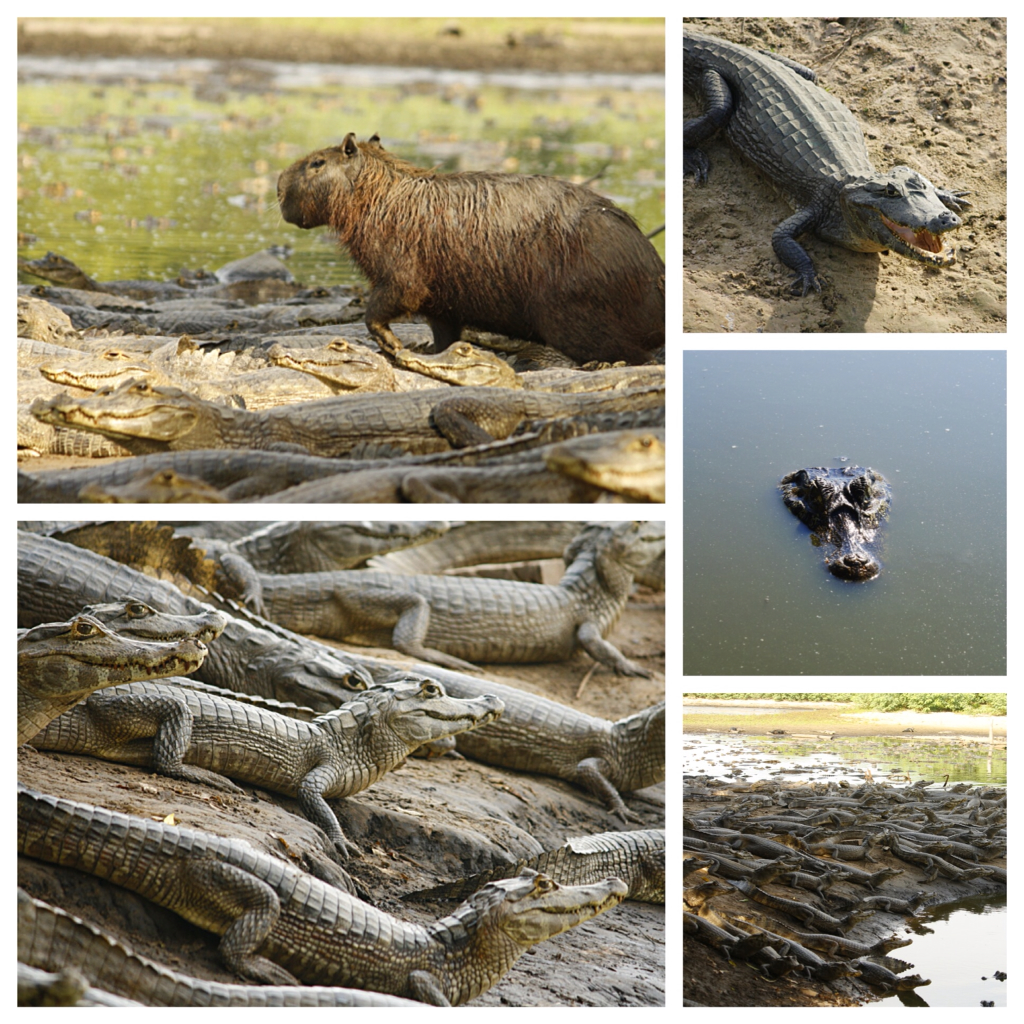
From the hassle and bustle of the concrete jungles to the inner depths of a real Brazilian jungle. No not quite the Amazon, but the vast natural paradise that is the Pantanal. One of Brazil's largest ecological attraction (but also crosses into Bolivia and Paraguay), the Pantanal, covers 230,000 sq km and contains up to 650 bird species and 80 mammals, including the worlds largest rodent, the capybara.
So from Rio we travelled west, 21hrs by bus, to Campo Grande. A sizable city which is the main gateway to the Pantanal and also host to the 3rd largest Japanese community in Brazil. The accommodation we chose was Hostel Campo Grand, ultimately because our Pantanal tour with Ecological Expedition included a free night there. The room was basic and fairly clean, and whilst there was no aircon it did have a fan with 2 settings baby whisper and jet engine. After a quick inclusive breakfast we travelled a further 3 hours to the drop off point (not much more than a dusty bus stop with old tyres as chairs) where we changed from our small minivan to a rusty old F100 pickup with next to no interior left and required the jaws of life to open the doors. From here the tour began...
We drove approximately another 2 hours, stopping along the way to spot wildlife. There was all sorts of birds, from stalks to turkeys, eagles, hawks and even toucans, some of the mammals included small little rodents, buffalo, deer and as mentioned before capybara. But the most impressive of all was the caiman, which is similar to a small alligator, and whilst poaching these animals is a big business there numbers are still in the millions.
The accommodation on the tour was quite nice, a large (seemed newly built) 3 story house with numerous double rooms and shared accommodation options on the second level. Downstairs was the kitchen and communal dinning and drinking area (which we may of partaken in). There was also some comfy outdoor chairs which over looked Rio Paraguai, a great place to sit back and watch the moon rise over the vast wilderness. (Fun fact: this river not only houses some amazing wildlife but is also used as the main transportation of iron ore from Bolivia).
Throughout the four days there we were kept busy with a range of activities, a night boat ride spotting some of the mystical nocturnal creatures, along and in the banks of the river, a morning boat ride which also included more animal spotting and a trek through some of the shallower wet lands in hope of spotting some anaconda (unfortunately they avaided us this time), more tracking though some of the dryer parts of the jungle, horse back riding (which I was really.... thrilled about) and lastly (and my favorite) paraina fishing.
Equipped with our bamboo pole, rusty hooks and what was either last nights dinner or just some old cooked beef we were dropped down stream on a small muddy bank. With a quick lesson on how to cast, which was basically just fling the sharp bit out into the river and then splash the tip of the pole in the water and "when you get nibble pull up", we were on our own. As the hot afternoon sun belted down on us, we assumed we were going to be in for a draining afternoon of slow and tedious fishing. However almost as quick as our sinkers hit the bottom the bites began and after a some premature jerking of the rods (excuse the pun) we finally go the hang of it and in came the parainias. Even though most of the fish caught was presumably under the legal limit (if one even exists for paraina) there were all kept and fried up for us that night. As for taste I would have to say that they were a little meatier than other fish I have had.
Overall our time in the Pantanal was very enjoyable, Ecological Expedition put on a good show considering its a budget tour.

- Ryan -